9 Best AI Visibility Tools for Shopify Stores (2026)
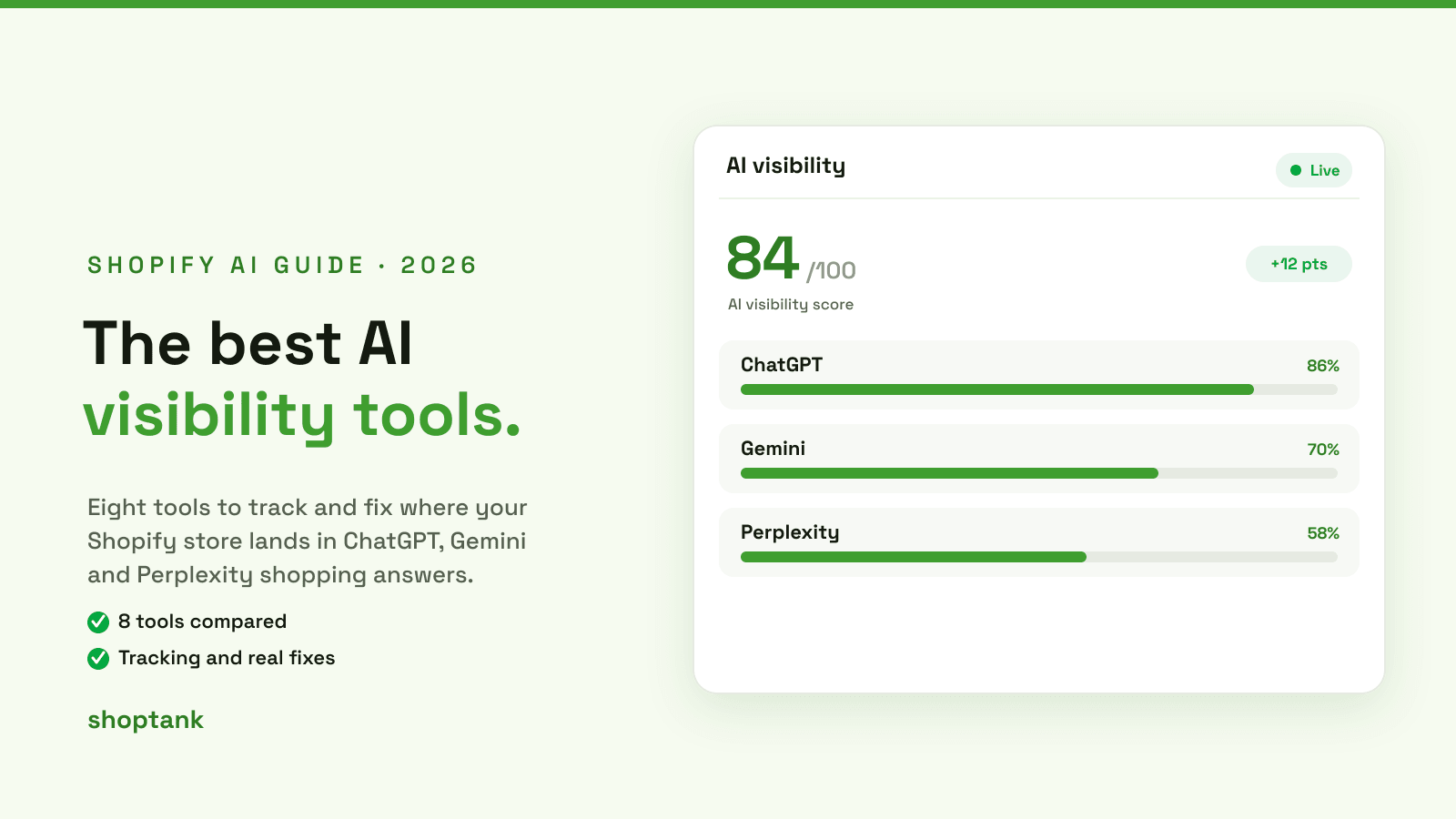
When a shopper asks ChatGPT, Gemini or Perplexity what to buy, the assistant does not return ten blue links. It names a short list of stores. If yours is not on it, the sale never reaches you, and you never even see the miss. That is why a new category of tools has appeared: AI visibility tools that show where your store lands in AI answers, and, in a few cases, help you climb.
We start with the free foundation every Shopify store should turn on, then line up the tools that track and win visibility on top of it, from free trackers to enterprise platforms. For each one we look at what matters for a store: does it track the right engines, does it understand the Shopify Catalog, and does it only report the problem or help you fix it. Here are the nine worth knowing in 2026.
Key takeaways
- Turn on Shopify Agentic Storefronts first. It is free and built in, and it makes your products eligible to appear in AI shopping at all.
- Most AI visibility tools track and report. Only a few help you act on what they find.
- For a Shopify store, being Shopify-native and Catalog-aware matters more than raw engine count.
- Shoptank is the one tool here that both tracks visibility and drafts the fixes inside Shopify, and the easiest way to start: a free plan and a one-click App Store install.
On this page
- What AI visibility means
- How AI decides which stores to recommend
- The 9 tools at a glance
- The 9 tools, reviewed
- Which one should you choose
- Common mistakes to avoid
What AI visibility means
AI visibility is whether an assistant names your store and products when it answers a shopping question. It breaks into two things: a mention (the AI says your brand) and a citation (the AI links to or sources your page). A good tool tracks both, shows the competitors that appear instead of you, and tells you which of your buyer queries you are winning or losing.

How AI decides which stores to recommend
Assistants do not rank pages the way Google does. They read structured product data, lean on the Shopify Catalog behind agentic storefronts, weigh cited sources and reviews, and match all of it to the shopper's intent before naming a few stores. If your data is thin or your category is wrong, you are invisible no matter how good your products are. For the full picture, see our guide to answer engine optimization.

The 9 tools at a glance
| Tool | Tracks | Fixes | Shopify-native | Best for |
|---|---|---|---|---|
| Shopify Agentic Storefronts | No | No | Yes, built in | Getting eligible for AI shopping |
| Shoptank | Yes | Yes | Yes, App Store | Shopify stores that want to act |
| Alhena | Yes | Partial | No | SKU-level ecommerce visibility |
| Profound | Yes | Partial | No | Enterprise and agencies |
| Ahrefs Brand Radar | Yes | No | No | Teams already on Ahrefs |
| Semrush | Yes | No | No | All-in-one SEO and AI |
| SE Ranking | Yes | No | No | Budget-conscious stores |
| Wellows | Yes | No | No | Mentions vs citations |
| Nightwatch | Yes | No | No | SEO teams adding AI |
The 9 tools, reviewed
1. Shopify Agentic Storefronts
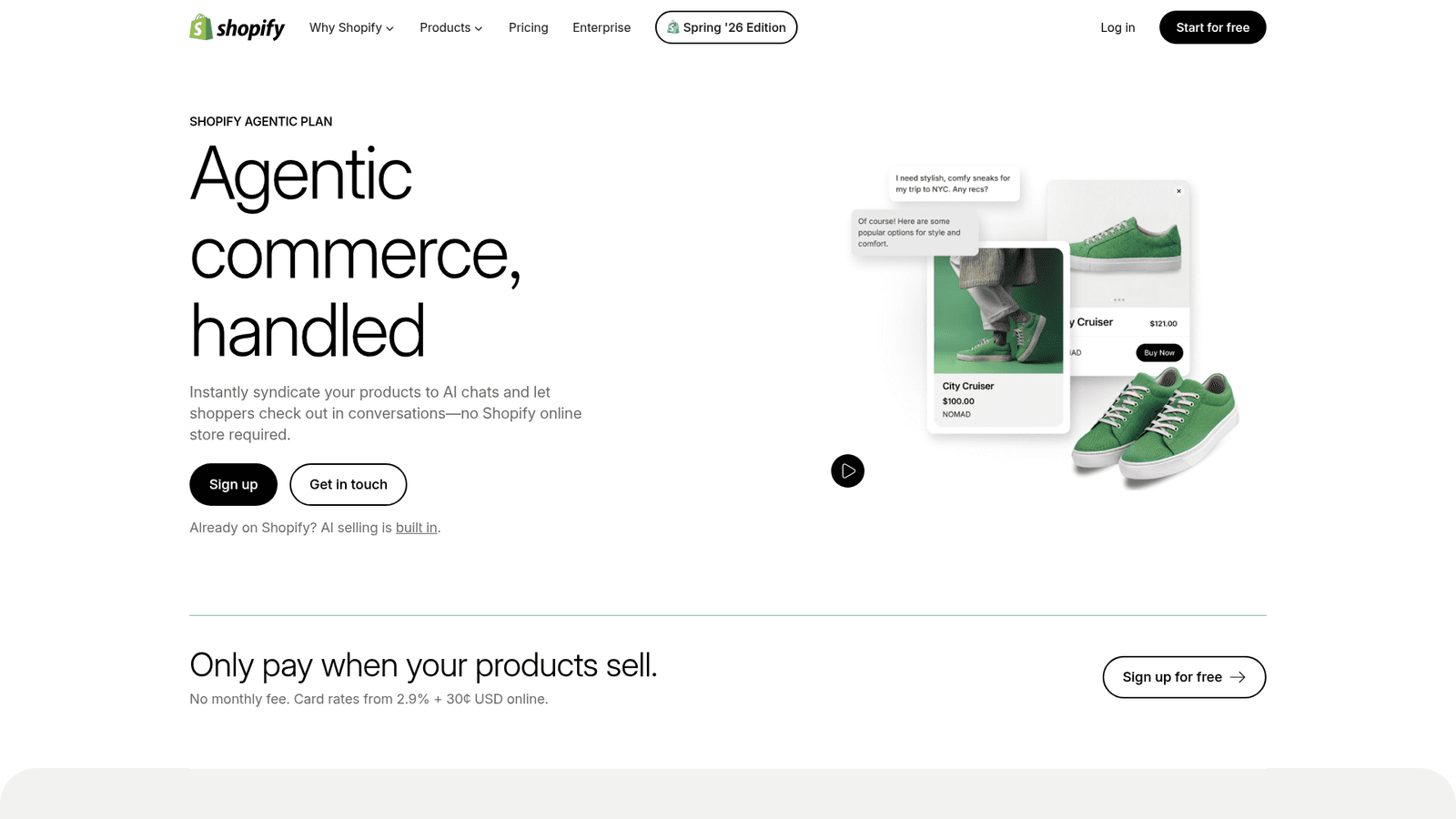
Start here. Agentic Storefronts is Shopify's own free plan that syndicates your products into AI shopping channels, so buyers can discover and check out inside a conversation with no separate online store required. It is built in for Shopify merchants, and you only pay when a product sells, with no monthly fee and card rates from 2.9% plus 30 cents.
It is the foundation, not a tracker. It gets you eligible to appear, but it does not tell you whether AI actually recommends you, who beats you, or what to fix. That is the job of the tools below.
Strengths: free to turn on; native to Shopify; the prerequisite for AI shopping visibility.
Watch-outs: no visibility reporting or optimization; being eligible is not the same as being recommended.
Best for: every Shopify store, as the first step before you measure or optimize.
2. Shoptank
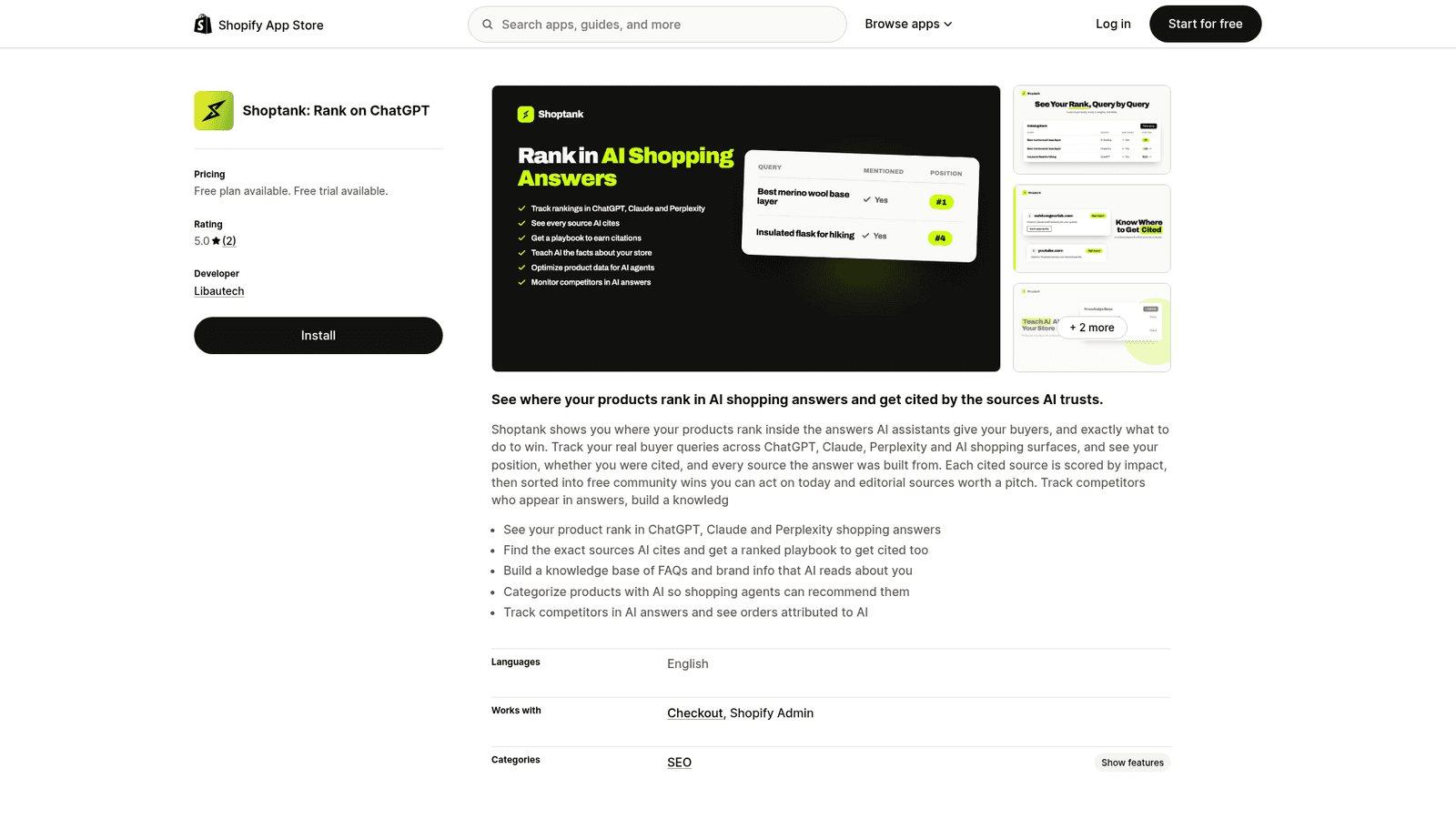
Shoptank is a Shopify app you install from the App Store. It tracks where you rank across ChatGPT, Claude, Perplexity and the Shopify Catalog, shows who the assistant recommends instead of you, and then does the part most tools leave to you: it drafts the fixes, optimizes your product data and categories, and builds the knowledge base AI reads.
It carries a 5.0 rating from just 2 reviews on the App Store, which is a very small sample, so treat it as early rather than proven. There is a free plan to start, then Starter at $99.99 a month.
Strengths: the only tool here that acts inside Shopify instead of only reporting; a free plan; aware of the Shopify Catalog.
Watch-outs: young app with few reviews; built for a single Shopify store, not multi-brand portfolios.
Best for: Shopify merchants who want the easiest way to start: track and fix in one app, free to begin.
3. Alhena
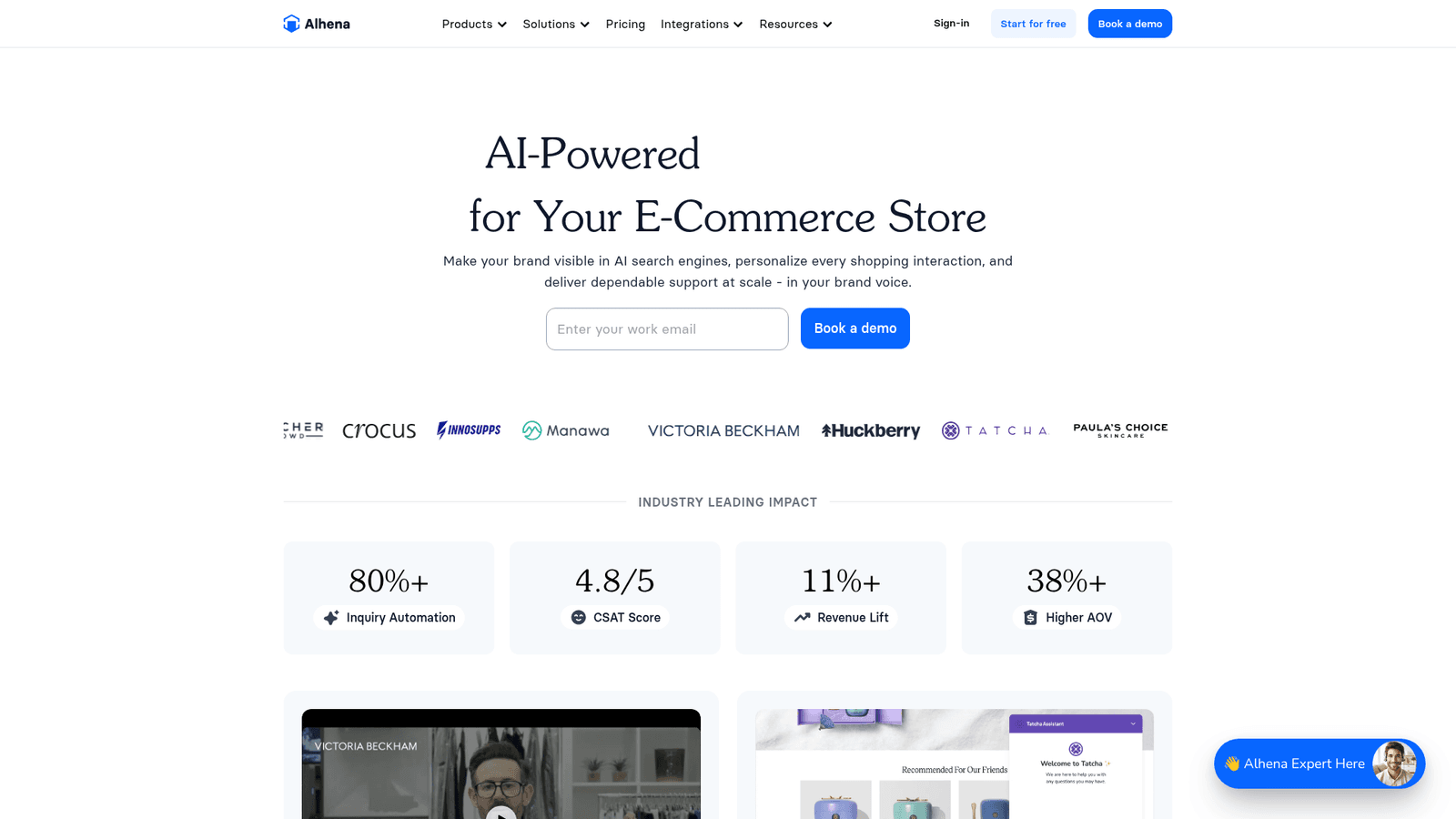
Alhena is an ecommerce-focused platform that tracks visibility at the product and SKU level, including whether your product card renders with price, ratings and images or just a plain brand mention. It also offers an AI shopping assistant for your store.
Strengths: product-level visibility tied to revenue; strong ecommerce focus.
Watch-outs: a broader platform than a small store may need; not a Shopify-native app.
Best for: ecommerce brands that want SKU-level visibility rather than brand-level mentions.
4. Profound
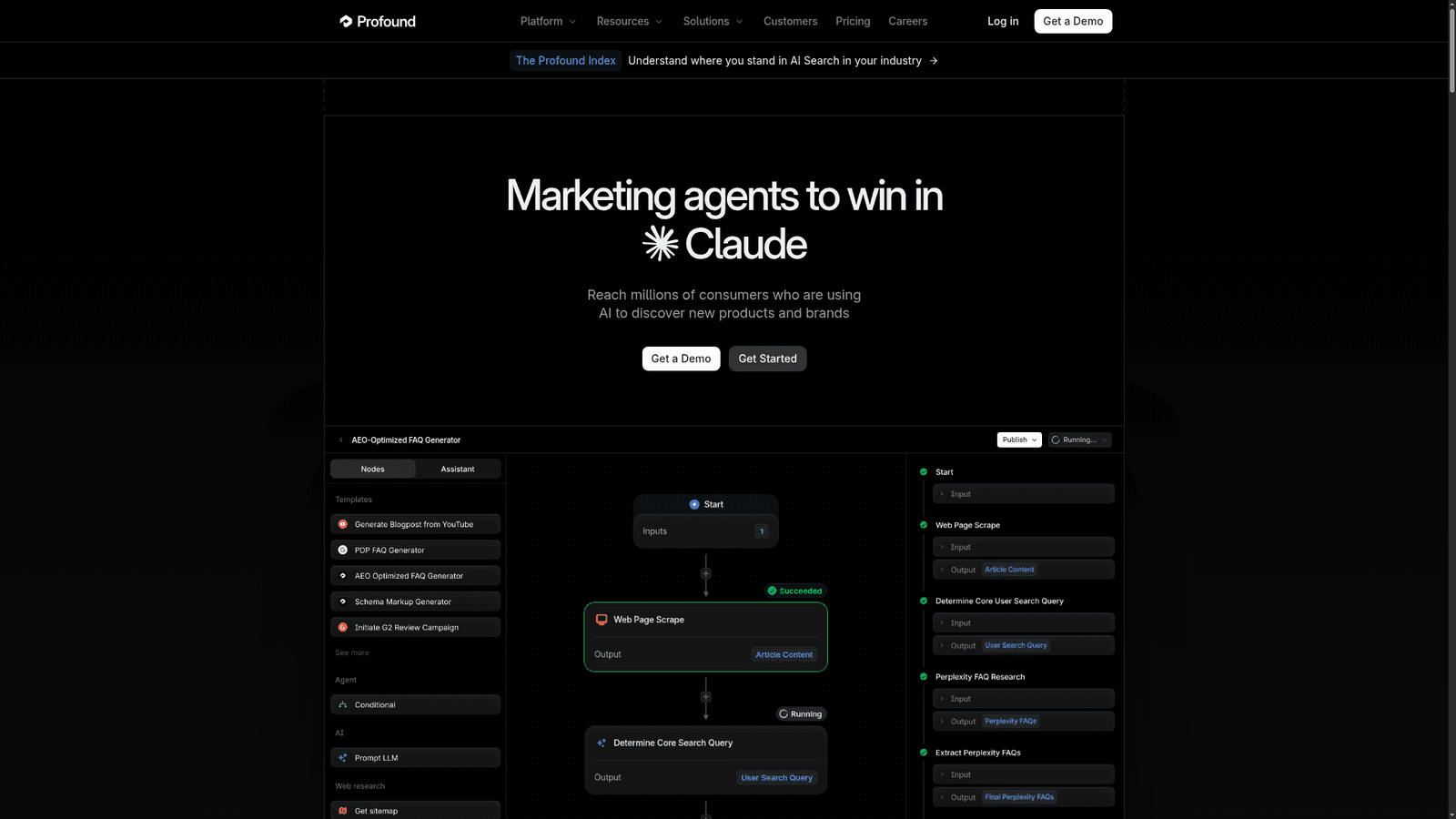
Profound is an enterprise answer-engine platform built around monitoring, creating and operating for AI search. It tracks how brands appear across engines at scale and is aimed at large marketing teams and agencies.
Strengths: deep analytics; multi-brand and agency friendly.
Watch-outs: built for enterprise budgets and workflows; more than most single stores need.
Best for: enterprises and agencies managing AI visibility across many brands.
5. Ahrefs Brand Radar
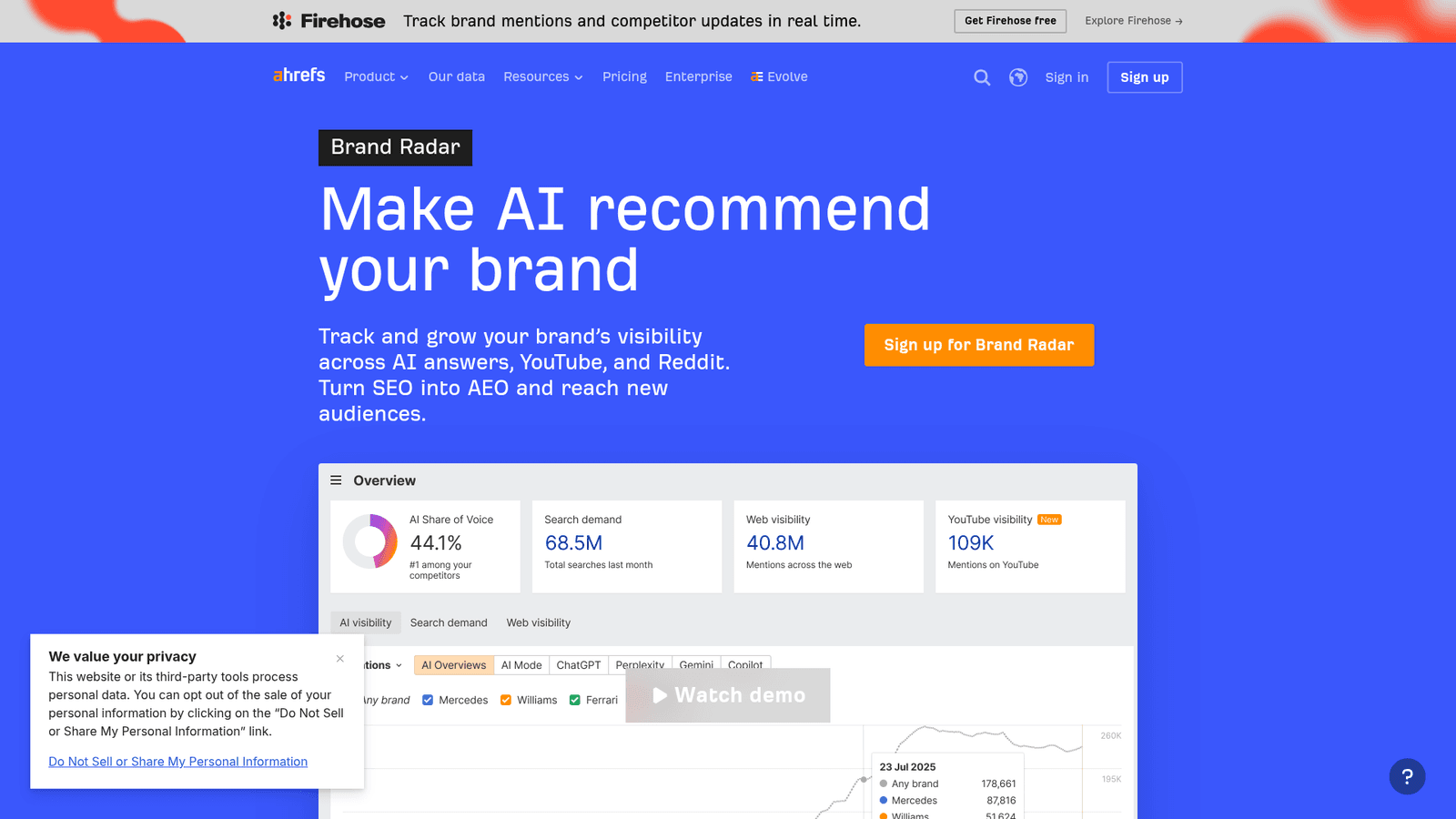
Part of the Ahrefs SEO suite, Brand Radar shows how brands appear across the major AI engines, drawing on a large database of prompts. If Ahrefs is already your SEO home, it is an easy add.
Strengths: large data set; convenient if you already use Ahrefs.
Watch-outs: not ecommerce-specific; it reports, it does not act on your Shopify store.
Best for: teams already living in Ahrefs.
6. Semrush
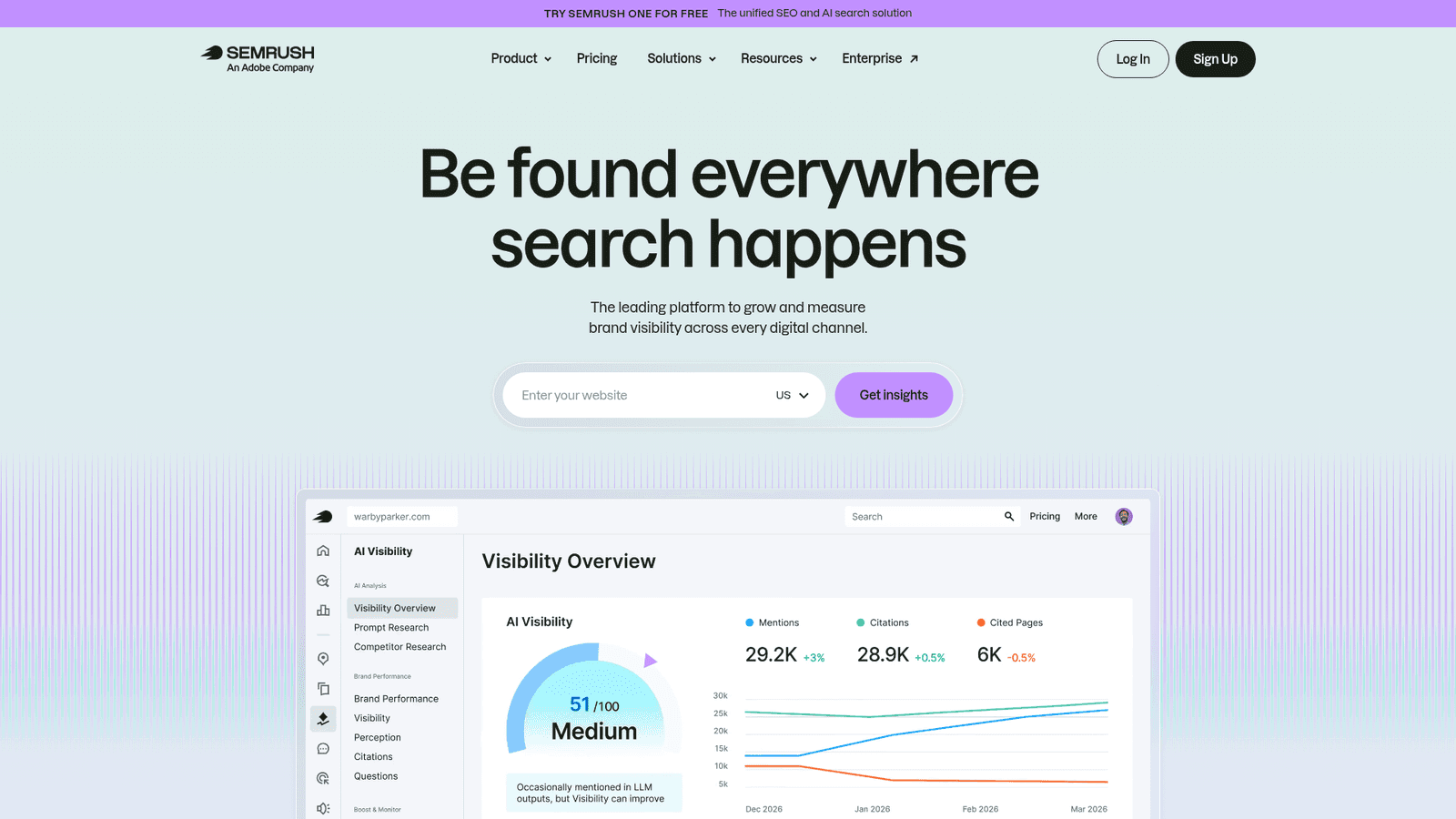
Semrush folds AI visibility into a full SEO and marketing platform, so you can watch AI mentions alongside keywords, backlinks and content.
Strengths: all-in-one; established and well supported.
Watch-outs: AI visibility is one module among many; can get pricey at scale.
Best for: teams that want SEO and AI visibility in a single platform.
7. SE Ranking
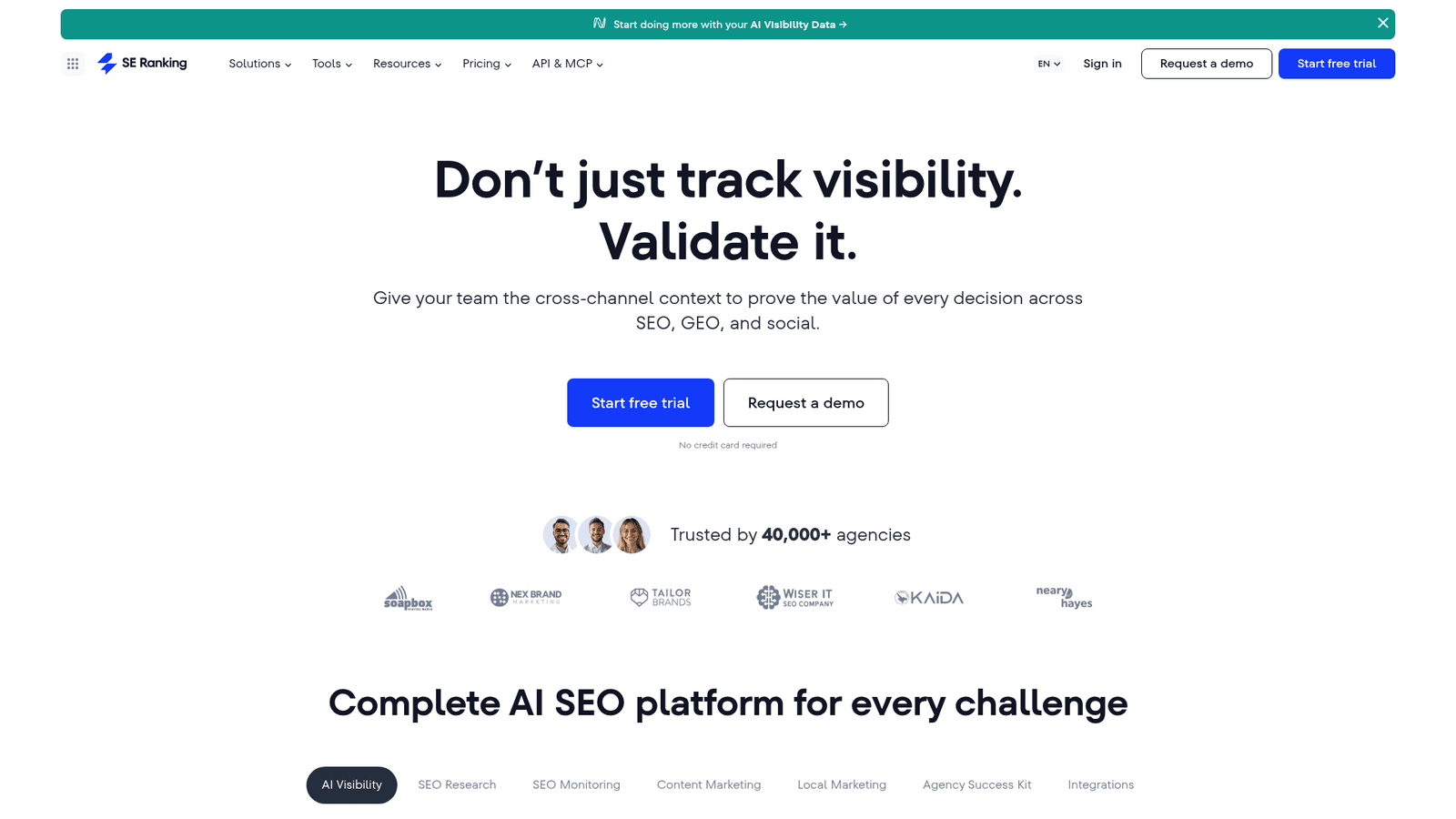
SE Ranking offers an affordable AI visibility tracker, including a free checker, covering the main engines. It is a sensible starting point for smaller stores.
Strengths: budget-friendly; free checks to confirm the problem.
Watch-outs: tracking-focused; not Shopify-native.
Best for: budget-conscious stores that mainly need to monitor.
8. Wellows
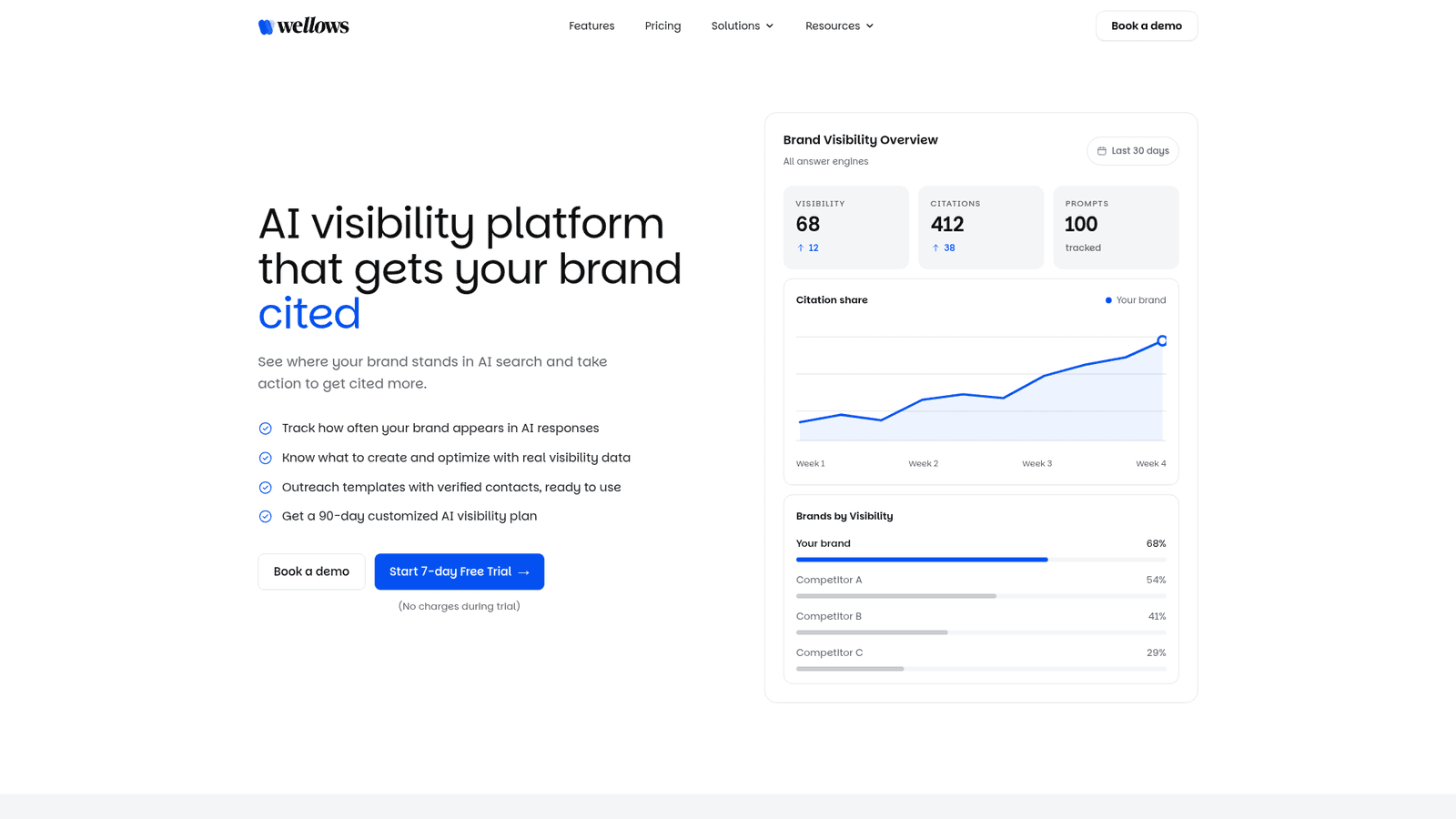
Wellows separates brand mentions from citations, so you can see not only whether an AI answer names you but whether it actually links to or sources your pages.
Strengths: a clear split between being mentioned and being cited.
Watch-outs: a newer, tracking-focused tool.
Best for: brands that want to understand citations, not just mentions.
9. Nightwatch
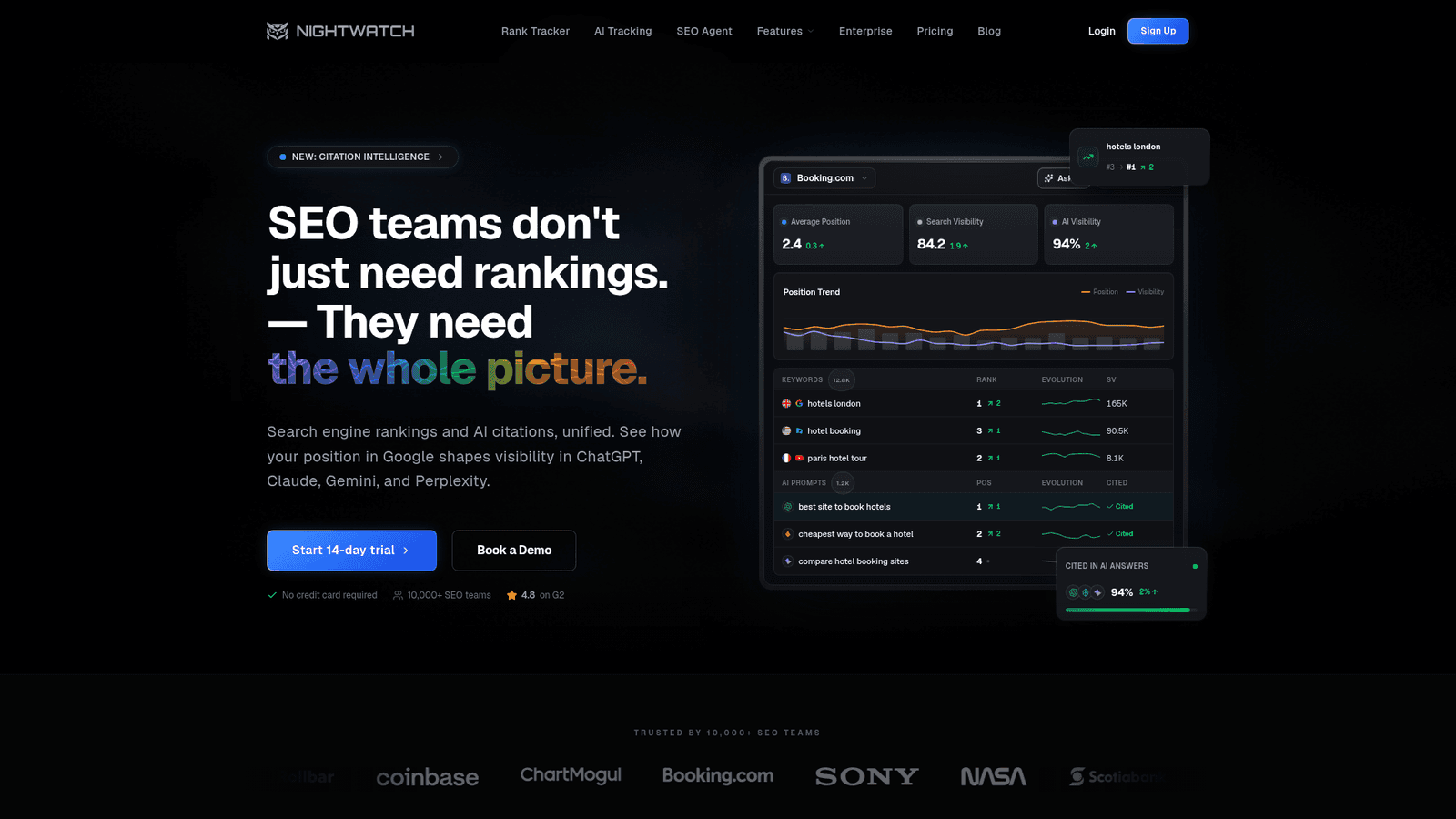
Nightwatch is a rank tracker that added AI mentions across engines, with competitor and citation views inside one report. Handy if you already track classic search rankings.
Strengths: unifies traditional rank tracking with AI mentions.
Watch-outs: a general SEO tool, not ecommerce-specific.
Best for: SEO teams adding AI visibility to an existing rank-tracking setup.
Which one should you choose
- Every Shopify store: turn on Shopify Agentic Storefronts first. It is free and it is the price of entry.
- You want to fix, not just watch: Shoptank, because it acts inside Shopify.
- You are an enterprise or agency: Profound or Alhena for depth and scale.
- You already pay for Ahrefs or Semrush: turn on their AI module before buying another tool.
- You are on a tight budget: start with SE Ranking's free checker or Shoptank's free plan.
Common mistakes to avoid
- Skipping the foundation. Without Agentic Storefronts turned on, you are not even eligible to appear.
- Tracking mentions but never fixing the data. A dashboard that shows you losing is only useful if you act on it.
- Watching one engine. Buyers spread across ChatGPT, Gemini, Claude and Perplexity, and they do not answer the same way.
- Treating AI visibility like classic SEO. Being one of ten links is not the same as being the store the assistant names.
The fastest way to find out where you stand is to run your own store against the assistants and see who they recommend instead of you. If you are on Shopify, you can do that free.